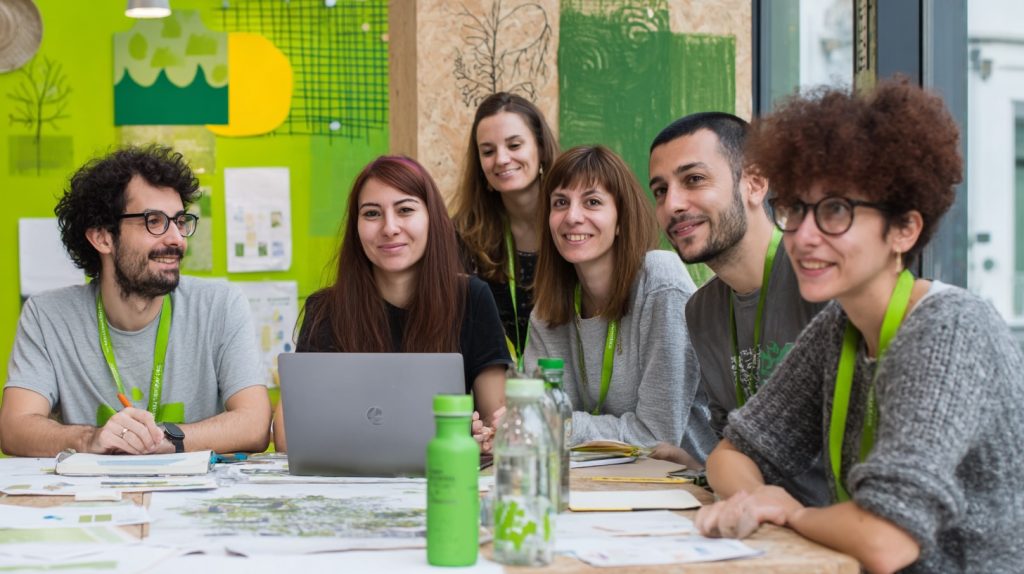
Most Erasmus+ applicants say their project is inclusive. However, evaluators are not searching for the word inclusion. They are looking for proof. Erasmus+ inclusion proof starts when your proposal shows how people with fewer opportunities can actually take part. For professionals shaping project applications, this is where good intentions become clear design decisions.
For related guidance, explore Erasmus+ resources. You can also follow AI Agent Node for more Erasmus+ proposal insights.
When Inclusion Stays Too Vague
It is easy to write that everyone is welcome. It is much harder to prove that everyone has a real path into the project.
That gap matters. If a participant faces a disability-related barrier, a language barrier, a rural access problem, a financial pressure, or discrimination, welcome words alone will not remove it.
As a result, a proposal can sound inclusive while still leaving participation to chance. Evaluators notice that difference because Erasmus+ inclusion is not a decorative paragraph at the end. It is part of the project logic.
What Erasmus+ Inclusion Proof Looks Like
The 2026 Erasmus+ Expert Guide makes inclusion and diversity core design principles. Therefore, a strong proposal does more than name groups with fewer opportunities. It explains the barriers those groups may face and the support that will make participation possible.
For example, the proposal should show who may be excluded, why they may not join, and what support they need. Then it should connect that support to activities, communication, selection, venues, formats, and budget.
This is the credibility moment. You are not promising inclusion as a feeling. You are showing inclusion as a plan.
The Shift From Welcome To Participation
The strongest shift is simple. Stop asking whether the project says people are welcome. Start asking whether the project proves people can participate.
That means thinking practically. Can people from rural or remote areas reach the activity. Can young people facing socio-economic difficulty afford to join. Can participants with disabilities access the venue, communication, and format. Can people with migrant backgrounds receive the support they need to feel informed and safe.
When these questions shape the proposal, inclusion becomes visible. Moreover, it becomes easier for evaluators to trust that your project will reach the people it claims to serve.
Build Proposals That Include People In Practice
If you work on Erasmus+ proposals, treat inclusion as a design habit. Bring it into your planning conversations early. Ask your partners where exclusion might happen. Then make the answer visible in the application.
Because when the proposal shows real barriers and practical support, the message becomes stronger. You are not just saying the right thing. You are building the conditions for people to take part.
That is the kind of inclusion evaluators can see. It is also the kind participants can feel.
Erasmus+ Inclusion Proof: Conclusion
In Erasmus+, inclusion is not about adding the right sentence. It is about proving that participation is possible for the people your project wants to reach.
So, before you submit, look beyond the promise. Show the barriers, show the support, and show the design choices that make access real. That is how Erasmus+ inclusion proof becomes more than a claim. It becomes a stronger project.