
You open LinkedIn, stare at the search bar, and feel completely unsure. Who should you connect with first — and does it even matter this early in your professional journey? This post is based on Lesson 4.1 — Planning First 20 Meaningful Connections and First Five Follows from Module 4 — My Network and Professional Engagement in the LinkedIn-DCI course. In this lesson, we explore how to plan your first 20 meaningful LinkedIn connections with purpose, safety, and a clear sense of professional direction.
For more information please check DCI resources.
The AI Agent Node shares practical perspectives on professional growth in the digital era.
Why Your First Meaningful LinkedIn Connections Matter More Than You Think
A random network is not the same as a useful one. Having many connections does not automatically create opportunities. This is especially true when those connections have no link to your goals, learning path, or professional field.
Without a plan, your LinkedIn feed fills with content that has nothing to do with your next step. Instead of posts about internships, youth projects, or your target field, you see things that do not help you move forward. Eventually, the platform starts to feel irrelevant — and you stop opening it.
This is not a personal failure. It is simply the result of a missing plan. Many young professionals avoid networking because they feel they need to be more established before they begin. In reality, meaningful networking starts much earlier than most people think.
The Real Cost of a Random Network
For young professionals, opportunities often appear through networks before they appear through formal applications. A trainer may share a course. A peer may post about an internship. A youth worker may announce a volunteering call. You are far more likely to see these moments when your network is connected to your actual direction.
There is also a safety dimension that is often overlooked. Connecting quickly with people you do not know — without a relevance or safety check — can expose you to unwanted messages or unclear professional situations. As a result, a thoughtful approach protects both your confidence and your professional image from the very start.
Furthermore, a random network creates noise. When your connections have no link to your interests, your feed may feel overwhelming and confusing. The problem is rarely that LinkedIn is useless — it is most often that the network has not been planned with care.
How to Build Meaningful LinkedIn Connections That Open Doors
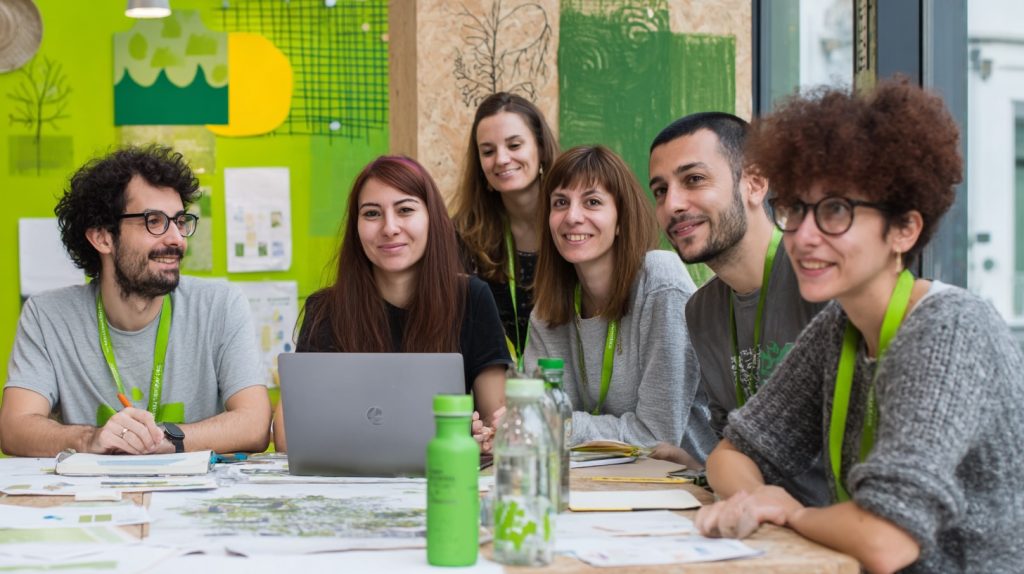
In fact, you already know more relevant people than you realise. Classmates, trainers, project peers, youth workers, Erasmus+ participants, and volunteering supervisors can all become purposeful connections. The first step is not to send requests immediately. It is to map what you already have — safely and with intention.
The professionals who build momentum on LinkedIn do not start by adding everyone. They plan. They think carefully about who is connected to their learning, projects, volunteering, community work, and opportunity direction. Consequently, their network feels clearer and more useful from the beginning.
Start With People Already in Your Learning Circle
Notably, education and training contacts are the most natural starting point. These are people who have already seen you learn, participate, and contribute — classmates, trainers, facilitators, and workshop leaders. A shared learning experience is already a professional reason to connect.
Additionally, project and volunteering peers can become strong connections. They have seen you work in a real setting — your teamwork, reliability, and initiative. Furthermore, Erasmus+ contacts and community organisers add important variety, connecting you to international learning, youth work, and future opportunities.
When planning these categories, ask yourself a simple question. Who has seen me contribute, collaborate, or complete something meaningful? That is already the beginning of your network — and it is closer than it feels.
Apply the Relevance and Safety Check
Before finalising your plan, run a quick check on every person or category. Consider three simple questions. Is this connection relevant to my learning or opportunity direction? Do I have a respectful reason to connect? Do I feel comfortable with this person viewing my professional profile?
If one answer is unclear, pause and reconsider. You can follow an organisation instead of connecting with a person. You can use a category instead of a name. Also, you can draft a message privately without sending it yet. Therefore, safe networking always gives you options at every step.
Privacy is also part of safety. If you are not comfortable writing names in a shared space, use categories only. “One volunteering peer” or “two former trainers” is still a valid and purposeful plan.
Your First Five Follows — Learning Before Connecting
Indeed, following is different from connecting. When you follow a company, organisation, topic, or group, you learn from their content without creating a direct relationship. This makes following a safe and useful first step for anyone new to the platform.
For example, a balanced first five follows plan might include one organisation in your target sector, one education or youth organisation, one Erasmus+ or European opportunity source, one topic connected to your interests, and one professional community. This variety helps your feed become more relevant and easier to navigate over time.
Moreover, following before connecting gives you important context. When you later reach out to someone from an organisation you already follow, your message becomes more specific and more natural. Instead of a vague request, you can refer to something real and genuinely relevant.
Meaningful LinkedIn Connections Tips That Actually Work
Above all, the best networking approach is simple, safe, and realistic. Start with people you already know. Prioritise quality over speed — one or two thoughtful connection requests are more valuable than twenty random ones sent in a single afternoon.
Also, use categories when the list feels overwhelming. Instead of asking who exactly to add, ask which types of people are relevant to your direction. Categories such as education contacts, project peers, volunteering contacts, and community organisers reduce pressure and open far more possibilities than a blank name list ever could.
Additionally, plan your message before you send it. A good connection message is short, polite, and specific. A simple sentence is enough — “We participated in the same programme and I would be glad to stay connected professionally.” Simple is respectful, and specific is memorable.
Finally, review your plan weekly. Your direction will develop as you progress. A person who feels relevant today may shift, and new contacts will emerge through new experiences. Small, consistent actions build a strong network far better than one rushed effort.
One Step Forward Is Enough
In short, you do not need a perfect profile, a large existing network, or complete confidence to begin. You need a clear plan and one small action you can take this week. That action could be updating your profile before connecting, following one organisation, or writing your first 20 categories.
Join the LinkedIn-DCI community to apply this framework alongside peers, facilitators, and professionals who are building their networks with the same intention and care. Because the best connections are not the fastest ones — they are the ones chosen with clarity, safety, and purpose.
Conclusion
As conclusion, meaningful LinkedIn connections are built through intention, not pressure. Your first 20 connections and first five follows are not a test of how experienced or established you are — they are a map of where your learning has already taken you. Start with categories, apply the relevance and safety check, and take one small step when you feel ready. Join our Training Waiting List [Pending — user to complete].